


Polyvinyl chloride (S-PVC)
Ercros is the leading manufacturer in the Spanish market

What is it used for?
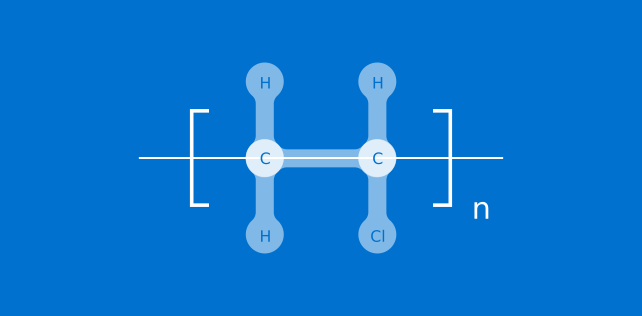
Polyvinyl chloride (PVC) is the product resulting from the polymerization of vinyl chloride monomer (VCM).
Ercros manufactures its PVC resin with suspension technology, having the entire production chain in its integrated industrial scheme: chlorine, EDC, VCM and from here to the PVC resin that is marketed under the Etinox brand.
PVC is the most versatile plastic polymer: it allows its transformation through a wide range of industrial processes (extrusion, calendering, injection, injection-blowing...) which, together with its excellent properties, favors its selection as a base material in final products from disparate sectors, like construction, automotive, consumer, health products...
The main applications, both rigid and flexible, are the following:
- Pipes and accessories for water channeling.
- Profiles for windows, doors, blinds and furniture.
- Sheets for waterproofing roofs and swimming pools.
- Cables and electrical material.
- Floors and wall coverings.
- Flexible hoses.
- Medical and hospital material: blood bags, medical tubes.
- Food films and pharmaceutical packaging.

Etinox S-PVC product range
<iframe title="PVC Etinox products range ENG" aria-label="Table" id="datawrapper-chart-sTzXX" src="https://datawrapper.dwcdn.net/sTzXX/4/" scrolling="no" frameborder="0" style="width: 0; min-width: 100% !important; border: none;" height="436" data-external="1"></iframe><script type="text/javascript">!function(){"use strict";window.addEventListener("message",(function(a){if(void 0!==a.data["datawrapper-height"]){var e=document.querySelectorAll("iframe");for(var t in a.data["datawrapper-height"])for(var r=0;r<e.length;r++)if(e[r].contentWindow===a.source){var i=a.data["datawrapper-height"][t]+"px";e[r].style.height=i}}}))}();</script>
PVC resins linked to renewable energy and circular ethylene
Etinox® Renew represents an innovation in plastic materials, developed in accordance with environmental criteria while maintaining high standards of quality and functionality. These new resins provide an efficient and traceable solution for achieving a substantial reduction in the carbon footprint throughout the value chain, achieved through the use of:
- Raw materials of non-fossil origin.
- Energy from renewable sources at all stages from chlorine manufacturing to PVC resin polymerization.
This results in a reduction of up to 35% in the carbon footprint compared to the sector average*.
* Based on internal LCA assessment vs Eco profile ECVM of suspension resins. Revision January 2026.

The entire Etinox® Renew family is certified by the voluntary ISCC PLUS scheme at the Tarragona industrial complex
Etinox® Energy Renew and Etinox® Circular Renew
The Etinox® Renew family is structured around two distinct offerings: the Etinox® Energy Renew range uses renewable electricity in its production process, allowing for a reduction of up to 35% in the contribution of raw materials in its carbon footprint compared to the industry average (Eco profile ECVM for suspension resins, revised January 2026).
Meanwhile, Etinox® Circular Renew incorporates circularity with raw materials such as reused cooking oils and used car tires, enabling approximate reductions of 70% in the contribution of raw materials to the PVC resin's carbon footprint compared to conventional alternatives.
Both products maintain the key properties of PVC: durability, abrasion resistance, good mechanical properties, and versatility, making them ideal for applications in construction, packaging, and healthcare materials.
Furthermore, the recyclability of PVC reinforces its contribution to the circular economy and its alignment with regulatory and market requirements.


White paper
The position paper of PVC4Pipes and TEPPFA shows that PVC pipes have an expected lifetime of 100 years.
Request for information
If you would like more information about this product or want to contact our technicians, you can do so here.

Certifications
Ercros certifies the quality, safety and environmental respect of the manufacture of this product, and is adhered to voluntary agreements that endorse its commitment to CSR and customer service.


Further information
To find out more about this product, you can visit the following links.


